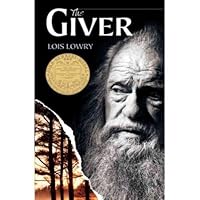


The Giver is a wonderful book. Lois Lowry skillfully crafted an intriguing and profoundly thoughtful story. She subtly creates an uneasy feeling that something is wrong with this "perfect world." The Community's advisors intend to establish security within utopian society, but they really establish a stifling dystopia. To protect people from the risks of making poor or wrong decisions in life, the advisors plan and dictate the lives of the people. In effect, the citizens have no freedom of choice; they do not choose their job or even their spouse. Moreover, the advisors inhibit the people's ability to feel because they want to spare them from the hardships and pain of life. For instance, individuals must take a pill everyday, which suppresses passionate feelings. The citizens do not know or experience true emotions like love. One of the goals of the Community is to achieve "sameness" so that no one feels embarrassed or gets excluded for being different. However, this limits individuality and freedom of expression because everyone conforms to a certain desired image. Finally, to relieve the population of the horrors and devastation of the world and the past, the advisors isolate the Community from the rest of the world (also known as "Elsewhere) and give the burden of holding the memories of the past to a single member of society: the "Receiver." Therefore, the Community lives only in the present, and the people have a narrow perspective of life because they only know their community and way of life. They are naive; they do not gain knowledge or wisdom from the memories. While receiving the memories, Jonas learns a different and better way to live and realizes what he and the Community have been missing. He decides that something must be done to change the current conditions and enlighten his community.
Although it is a Newbery Award Winner, The Giver is a controversial book that has been challenged and even banned. After parents complained that the violent and sexual passages were inappropriate for children, the Bonita Unified School District in California temporarily banned the novel from classes. The Giver has been challenged in other school districts around the country for its "mature themes" of euthanasia, infanticide, and suicide. I do not agree with banning and challenging of this novel. It is a great book, and part of what makes it so great is the incorporation of these controversial issues. They force readers to wrestle with their own thoughts and figure out their stance on the issues. Good literature makes readers think. Banning this book takes away the freedom of speech, the freedom to read, and the freedom to learn and explore. The banning of The Giver is ironically similar to the actions of the Community that lead the Community to its suppressive and stifling state. A powerful story, The Giver keeps readers in suspense, touches them, and stays with them for a long time. I love this book, and I encourage everyone to read it.
Click Here For Most Helpful Customer Reviews >>
Jonas, an Eleven when THE GIVER opens, lives in a Community where everything is meticulously ordered: houses look alike, people dress alike, each family unit includes a father and a mother (who can apply for one male and one female child). Children begin their volunteer hours when they are Eights, and the Committee of Elders assigns them their roles in the Community at the Ceremony of Twelves. Because the people have chosen Sameness, nothing in their Community is unexpected, inconvenient, or unusual. They have no hills, no color, no cold, no sunshine. Their feelings are only superficial; their memories encompass only one generation. Pain is relieved instantly by taking a pill. They have abdicated choices.The Receiver of Memory holds the position of highest honor within the Community, serving as the repository for the memories and knowledge of generations. Whenever the Committee of Elders are faced with a new situation, they are able to seek the counsel and advice of the Receiver. They have the benefit of experience without having to bear its pain.
Because of his intelligence, integrity, courage, wisdom, and Capacity to See Beyond, Jonas is selected to be the next Receiver of Memory. The current Receiver, who has held the position for decades, then becomes the Giver.
Ms. Lowry paints a vivid picture of this Community. Referring to everyday concepts in a slightly unusual way helps to set that society apart from our own. Babies younger than one year are called "newchildren," for example; children of the same age are "groupmates"; the elderly, the unhealthy, or those who have broken the rules three times may be "released."
Why might parents or teachers consider THE GIVER inappropriate for their children? I can only speculate on this since I find the book profoundly original and commendable:
1. The setting being a community without freedom. It should be noted, however, that citizens relinquished their freedom years earlier in order to escape the accompanying chaos. They are perfectly satisfied with their arrangement and are not oppressed.
2. The family being depicted as a temporary sociological unit rather than a permanent socio-biological unit. Nevertheless, this family unit provides a very nurturing atmosphere.
3. References to "Stirrings" (sexual arousal). These occur only a few times in the book and are only vaguely described. Since Stirrings are forbidden in the Community, young people begin taking a preventative pill upon first experiencing them and continue taking it daily until they enter the House of the Old.
4. The idea of young people bathing the elderly of the opposite gender. This happens only once in the book. It is a gentle, caring, and (given the ages of the participants) asexual experience.
5. The concept of "release." This pervades the book, but its meaning remains uncertain until Chapter 19, when Jonas witnesses a release.
I would think that for many readers these concerns would be assuaged by Jonas, the young protagonist who, in the course of his instruction, recognizes the advantages of previous systems and selflessly tries to better his Community.
Although there are aspects of this Community that we may find unsettling, we must remember that Lowry is not advocating this system. She is, in fact, inviting us to consider whether our own society has any of the characteristics of the Community that disturb us:
Do we attempt to make our lives pain free?
Do we attempt to erase unpleasant memories?
Do we use euphemisms?
Do we use robotic phrases, as for apologies?
Do we have anything resembling the "House of the Old"?
Do we have a ritual that might be called a "Ceremony of Loss"?
Do we attempt Climate Control?
Do we avoid talking about ways in which we differ from each other?
In our own Society, without a designated Receiver of Memory, that responsibility -with its inherent pain and exhilaration -falls to each of us. Vital questions for us to consider are Which memories will we receive? Which will we give?
Best Deals for The Giver
In a community that is all the same lives Jonas, who discovers he is very different. Jonas is the main character in the book The Giver, my favorite book. I loved The Giver because the plot was very creative, the theme was magnificent, and the setting was vivid. I think you should read this book for many reasons. The theme of this book is clearly represented: freedom, the right to make your own choices, uniqueness, and individuality are worth dying for. In Jonas's community, a commitee selects one's job, war is unheard of, all people wear the same attire, and all are assigned spouses and families. When Jonas is given the special, wonder-filled occupation of becoming the Receiver of Memory, he finds that there is much more to life. Through his task of becoming the Receiver of Memory, he discovers the meaning of love, pain, frustration, color, and cold. That is when Jonas realizes how much more there really is. Life soon becomes overwhelmingly unbearable in his world of "sameness." He finds life isn't worth living without the qualities (often that we take for granted) he discovered. That is when Jonas goes on a dangerous journey to find a land that is different. The setting in this book made it quite a pleasure. Everything in the community was predictable and pre-planned. The housing units were all the same. There were designated spots for everything. The setting helped develop the plot and theme. The mysterious ending leaves one filled with curiousity and wonder. The book, The Giver, by Lois Lowry is guaranteed enjoyment, especially for someone who likes a good theme and plot that ties in with the setting. I loved the boook The Giver, and I truly believe that everybody should read it!Honest reviews on The Giver
One of the few books that I can ever read past the first few chapters, Lois Lowry's "The Giver" has easily made its way into one of my favorite books. It's amazing how many only 170 some odd pages can work on so many levelsemotionally, socially, politicallyand still pull it off. Lowry perfectly brings a coming-of-age boy (Jonas) forced to live in a seemingly "perfect" community into receiving the truth about the past, a past where pain existed, a past where feelings existed. Jonas' own naivete towards the world is the most interesting part of the book; watching him come to his own revelations about the very society he lives in, and the pure simplicity of his convictions: "But we SHOULD have choices!" Lowry leaves a lot of the book open for you to fill in the structureshe never really explains the whole concept of why people moved to "Sameness," and I really think that's for the best. I think it gives the message that maybe we really aren't made for perfectionbecause, perhaps, beauty comes in imperfection. A classic.Find helpful customer reviews and review ratings for The Giver
At first when i had to read The Giver for my english class, I was "This will be boring!". When I came back from school, I started reading...and i couldn't stop! This is a unique story, the people are all the same. They live in a world with no music, or color or differences or true love. They take a pill to make them act like robots. The community gives them a job and a spouse and a family. They get their jobs at the 12th year. There is peace, but they don't have almost any feelings! Jonas is choosed to be the Receiver. He will have all the memories of The Giver. He will have all the memories of the old times (colors, love, pain, loneliness, hapiness...), so he can be the wiseman of the community, he will make the best decisions for the peace of the community. But only one person cannot handle all these feelings and he feels apart from the others, he feels he can't fit in anymore, like when he was still a child. He grows too old for a kid of his age and the other kids don't understand him. Then he learns the end of every person released in to the "Community's Elsewhere". But he decides to control his own future. With the help of the Giver, he discovers that there is a different "elsewhere" for everyone, some place beyond the community, where the past, the present and the future are. This is a wonderful book, that made me smile and cry. I will never forget this book, who has strong feelings to communicate to the reader. I stopped reading sometimes, for a minute, and look around me, enjoy the colors, the music and the happiness of be free of my own feelings. This book is one of the best books I have ever read, i really love this book and I think everyone should read it.

No comments:
Post a Comment