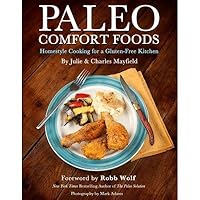


One downside: there is no table of contents! Only an ingredient-based index! So if I search for 'cauliflower', there are 10-20 pages where cauliflower is mentioned and I have to go through all of them to find, say, the cauliflower puree. Makes no sense! That's the big minus for me.
Click Here For Most Helpful Customer Reviews >>
I received this book in the mail just a few days before having guests for the week, and I thought it would be a great way to try out some of the recipes! I must say the book is gorgeous, and the photos make my mouth water. Not only that, but every recipe I've tried so far has been awesome! So why only three stars? Well because this book has absolutely the *worst* index I think I've ever seen in a cookbook.The day my guests were arriving after a long day's drive I decided to make some guacamole for their arrival, and I recalled seeing a beautiful guacamole in the cookbook. So I pulled it out and did looked up "guacamole". Nothing. Not there at all. So I went to Avocado, hoping maybe to see something like "avocado, guacamole" as I have in other cookbooks. But NO, I got there and saw: "Avocado 30, 46, 56, 66, 92, 96, 128, 156 ..." and on and on. Lots of page references with no hint as to what the references were. My time was short so I just gave up and made my own guacamole recipe from memory, which is tasty anyway.
I also recalled seeing really excellent looking muffins in the cookbook and thought they would be great to make for breakfast one day, so again I turned to the index and looked for "muffins" and again under "muffins" there was Nothing, Zip, Nada. This time I was lucky however, as my eyes happened to fall on the entry "morning glory muffins" right above where muffins SHOULD have been in the index. Yay, I made them and they were fabulous. But suppose they had been called "early rising muffins" or "great start muffins"? I sure never would have found them by searching the index.
I later found the guacamole when I had more time by starting at page one and thumbing through, and finally found "chunky guacamole" on page 66. And sure enough, the index referenced "chunky guacamole".
But is a person supposed to remember the NAME of every single recipe in order to find it in the index? I'm starting to write in by hand in the proper alphabetical location the recipes that look of interest to me. But why should I need to to?
That said the recipes I have tried were really good: morning glory muffins, banana bread, basic biscuits. And the pecash butter is totally awesome. I love that one. :-)
Best Deals for Paleo Comfort Foods Homestyle Cooking in a Gluten-Free Kitchen
If you are like me, you cringe when you open a cookbook and flip through the recipes only to see an ingredient list a mile long. And then you glance at the preparation steps that are the equivalent of a long essay. For busy folks, this can be mentally defeating to the point of having no further interest in any recipe, in spite of the tempting photos.A wonderful new cookbook has just hit the stands, and it rejects that nonsense in favor of offering up painless prescriptions for individuals who wish to shun the convenience in a box or bag, and control what feeds their bodies, _Paleo Comfort Foods: Homestyle Cooking in a Gluten-Free Kitchen_, which is available at Amazon now.
I received a review copy from the authors, Julie and Charles Mayfield, because I have a desire to bring to folks any tools that can assist them in their journey from the SAD (Standard American Diet) toward a real-food lifestyle that offers them long-term health and the joy of being self-sufficient in the kitchen. This book is a marvelous tool that will help individuals to deep-six the Lean Cuisine and Hot Pockets monstrosities and unleash their inner chef.
Upon receiving the book, I experienced some immediate skepticism the book was very large and the short chapters at the front presented some very large type. As I thumbed through the early chapters, however, I noticed the colors and layout popped out at me in a pleasant sort of way. The type size calmed down for the actual recipes, and the larger size of the book even grew on me after a while. The book is easy to fling around in the kitchen as you are moving about and putting together your next remarkable meal. I also questioned the word "Comfort" in the title, that is, until I discovered, in the introduction, that there is some Southern influence behind this book. The Southernisms are a bonus, especially when you note some of the traditional, carb-loaded Southern foods mellowed out paleo-style for your health-nut lifestyle. The recipes for okra, collard greens, green fried tomatoes (using almond flour), and paleo grits are an indicator that the book is a wee bit different than your usual paleo cookbook. I have already made the collard greens recipe using my pastured bacon and ham hocks from a half hog I just welcomed into my freezer two weeks ago. A raging success!
My personal belief is that recipe books are a compilation of suggestions, and it is up to the reader to use the suggestions and build upon them through customization. The book's introduction contains a confirmation of this when the authors state that, "This cookbook is not meant to be all things to all people. Rather, it is intended for those who want to expand their "real foods" cooking repertoire, learn a few bits here and there, and maybe get some creative ideas on adapting recipes to these frameworks."
That is what this cookbook promises, and it succeeds. Not only is it an outstanding tool for expanding your catalog of food preparation ideas, but also, it is the perfect starter kit for the raw beginner who thinks he can't cook and doesn't know where to start. The book starts out with some real basic stuff for beginners kitchen foods and cooking tools. A number of people write me often and tell me they have been relying on convenience foods for so long that they do not know where to start, what to get, and how to put things together. Since this is a cookbook that embraces a particular lifestyle paleo or real food it has the starter guide that many folks need and deserve to have in any cookbook.
On the other hand, this book is also a valuable resource for seasoned paleo and real-foodist pros, too. I am very creative and experimental in the kitchen, and this book only adds to my innovativeness. Many of the recipes, I find, are great to start from and customize to your own taste and desire. The authors include "Variations" with many of the recipes, and these are gentle reminders that there's more than one way to skin a cat on any recipe in the book. Julie and Charles also include some "Tips & Tricks" and "Ingredient Notes" throughout the collection of recipes.
One point worth mentioning when reviewing any paleo cookbook is that the recipes reject the standard industrial oils, wheat, and the usual sweet frills. Instead, the recipes use items not found in the average American kitchen: nut oils, coconut oil, coconut milk, almond meal or almond flour, coconut butter, clarified butter (you can buy ghee), etc. The average person might need to buy a few staples of the paleo lifestyle to get going in the kitchen. Whole Foods and Amazon.com are good resources for this one-time shopping binge.
As one new to cooking, you might want to know what is the single best thing about this cookbook? The answer is that there is a photo (or two) for every single recipe in the book. Yes, people are still publishing cookbooks without photos, which I find to be intolerable. As a creator of food on the suggestions of others, I want to work toward the visual that appears before me, even if I change up a few items to reflect my peculiar inclinations. Visual people want photos, especially if they are newbies to cooking with a lot of real foods, making stuff from scratch. The book's photos are outstanding and tempted me to stick page markers on one-third of the recipe pages.
What is also notable is that Julie and Charles include recipes for some of my favorite paleo staples such as homemade mayonnaise, tarter sauce, and ketchup. Handcrafting these items with simple recipes allows you to avoid the high-fructose corn syrup and soybean oil typically found in the shelf version of these products. They also include recipes for stocks (chicken and crawfish) and sauces that can be used with various concoctions. The overall recipe coverage is there: starters and snacks, sauces and staples, soups and sales, side dishes, main dishes, and sugar-denying desserts.
Almost none of the recipes within this book are time-consuming or difficult, even for the newbie who swears he "can't boil water." This is easy stuff, folks, and I would not mislead you on that fact. Wheat-free pumpkin pancakes, fish tacos, peanut sauce, and meat-stuffed acorn squash they can all be made in short time with minimal mess.
Furthermore, note that the paleo or real-food way is the opposite of a diet it is a lifestyle that will allow you to rediscover real, nutritious food, with a smattering of resources at your disposal, with the most important being the roadmap, or cookbook, that will guide you toward developing accountability for your own long-term health outlook.
Be forewarned: buying this book will force you to invert the federal food pyramid and deny its authority while claiming the mantle of heresy.
Honest reviews on Paleo Comfort Foods Homestyle Cooking in a Gluten-Free Kitchen
I love this cookbook on so many levels. First, Julie and Charles Mayfield are an adorable couple they did a cooking demo at my CrossFit gym and really seem to love cooking (and each other!). Their love for cooking, ingredients and teaching people how to live a healthy lifestle are obvious from the introduction and throughout the book. They add personal notes that can only come from a sheer joy of cooking to almost every recipe, including options for "cheating" as well as tips for freezing items, alternatives and other options. And the photos are wonderful but the best part is that they are "real" not doctored up with any of the food stylist tricks!Second, and perhaps most important, the food is amazing. But it's also pretty easy! I should say it's deceptively easy I would happily make many of these dishes for company and I'm quite sure my guests would think I had spent a day in the kitchen, but in reality, most are quity simple to put together with even the most basic kitchen skills (which, BTW, the Mayfields generously share).
Third, and probably as important as the previous point, my whole family has loved everything I've made. While they don't "follow" Paleo, my rule is if I cook it, you eat it. So most times dinner is Paleo! And even my somewhat picky 3-year-old has happily eaten everything. (My 8-year-old is a total carnivore, so she's easy. But she did LOVE the creamed spinach!).
In the day of the Internet, when it's easy to NOT own any cookbook, I am proud to have added this to my collection.
Find helpful customer reviews and review ratings for Paleo Comfort Foods Homestyle Cooking in a Gluten-Free Kitchen
I love it when a new cookbook comes out. I love experimenting with my meals, and trying new things, but it's still been only a relatively short time since I started putting more effort into cooking, so my experience is rather short. If my life's story in cooking was compressed into a 30 minute daytime television cooking show, the first 29 minutes would be spent making ramen noodles and the last minute would be dedicated to grilling the perfect steak.So, like I said I love it when a new cookbook gets published. The Paleo Comfort Foods cookbook is the newest addition to my library. Trust me, you'll want to add it to your kitchen bookshelf as well.
This isn't your run-of-the-mill paleo recipe list, with all of the standard healthy fare that people are use to. Well, the recipes look healthy but they're based around old-fashioned homestyle type meals.
We're talking about things like fried chicken and grits items rarely seen on your average paleo food list. And if the list of recipes doesn't get you salivating, the superb photography by Mark Adams will do the trick. It's almost not fair how good these meals look on paper.
Instead of just talking about the book, let me share with you a couple of the recipes that I cooked at home with my fiancee. We picked out the turkey meatloaf and the sweet potato casserole. I'm not really sure if the casserole was suppose to be a dessert or entree, because honestly it felt like both.
I liked both recipes well enough, with the instructions and list of ingredients being incredibly manageable.
We started on the meatloaf first since it had the longer baking time of 90 minutes, and then started working on the casserole after the loaf was put into the oven.
This turned out to be a great idea since the casserole was ready to go into the oven coinciding with the exact amount of time left over for the meat loaf. I wish I could say that I planned it that way.
Be sure to recognize how much food the recipes will produce. I saw the 4 pounds of ground turkey on the list of ingredients, and knew that would be a lot of meat, but it didn't really sink in until I pulled this massive meatloaf out of my oven.
We happily feasted on leftovers all weekend! Reducing ingredients for desired portion size is no big deal, so just downsize to meet your needs.
Overall, I'm looking forward to digging through the rest of the cookbook and planning out some new meals to cook each weekend. Cooking really can be a lot of fun, and eating can be too when you have such a great resource to work with!


No comments:
Post a Comment