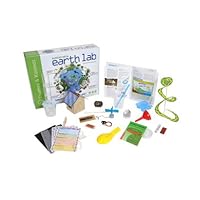


The ecological footprint of this kit is light as all the materials fit in a box 14 1/2" x 11 1/2" x 3." You will need other materials, most of which you will find around your home. For example some of these items include things like glasses, all-purpose glue, vinegar, a watch, laundry detergent, and water. In addition to the 48 page experiment manual there are 28 items in this kit: Parts from a die-cut sheet, parts from a paper sheet, a thermometer, a small motor, a solar cell, a compass, a magnifying glass, an impeller wheel, a drive axle, a wooden stick, an aluminum cup, a clothespin, a water filter column (3 cups, 3 filter papers), garden cress seeds, a petri dish, thick copper wire, an ice cube tray, a measuring cup (125 ml), a balloon, fabric netting, a funnel, black paper, white paper, a battery clip, a spool of wire, sand paper, a drinking straw, and a polystyrene foam disk.
There are a wide variety of experiments in this kit, enough to suit any young "energy detective." When I first opened the box, due to the nature of this kit, I was rather shocked to pull out a Styrofoam tray containing the contents of the kit. On the back of the experiment manual I soon learned it was recyclable expanded polystyrene foam (EPS). I was pleased because Thames & Kosmos are practicing what they preach and are environmentally conscious in their packaging. The experiments are challenging, encourage children to think, are fun, and any of them could lead to a school report or encourage further scientific thought or experimentation. Each experiment offers a problem or example to explore, gives a list of things you will need, has a step-by-step procedure to work with, and offers up an explanation to go with the results. There are photographs, illustrations, and numerous informative sidebars scattered throughout the manual. This would be a perfect kit to use in the homeschool or classroom setting.
Click Here For Most Helpful Customer Reviews >>
This science kit has a well rounded assortment of projects relating to the environment. Every kid should do these experiments and learn about the crucial issues presented in this kit. The manual has a lot of info (a lot of text) in it, so it can be a bit dense at times, and so a parent definitely needs to go through it with their kids. I imagine a teacher could also adapt the projects for more kids to do in a classroom setting. The best experiments are the ones with renewable energy, like solar cells and windmills. Some of the experiments can be repeated, but most of them can only be done once or twice. We all learned A LOT!Best Deals for Thames & Kosmos Alternative Energy and Environmental Science
My g-daughter went crazy over this one. It has quite a bit in a small box, enough to keep them busy for a while. I liked the fact it taught alternative energy.Honest reviews on Thames & Kosmos Alternative Energy and Environmental Science
Purchased last Christmas for a third grader who was demonstrating an emerging interest in science. She has consistently returned to this Christmas "toy" throughout the year, both for use independently and with her adult learning partners (mom, dad, aunts, uncles, grandparents...she has everyone involved!) Some of the labs should require adult assistance. In those labs, we have enjoyed watching her explore the materials, ask her questions, and help her set them up. "What science experiment are we going to do next?" is a regular question from not only our little scientist, but from her younger brothers as well. It has adequately entertained an 8, 7, and 4 year old. Mostly, we are pleased by the excitement for science it has reinforced in our family. We are very thankful for the affordable price at which Amazon offered the set last year. And again this year as the Christmas shopping season approaches, we will be watching Amazon for excellent pricing on the National Geographic kits. Overall: Very Pleased; Would Buy Again.Find helpful customer reviews and review ratings for Thames & Kosmos Alternative Energy and Environmental Science
Bought for my 5th grade son to use for a science fair project and it worked quite well. Very interesting.

No comments:
Post a Comment